

Why Online Reputation Management Is the Most Underrated Growth Strategy for Small Businesses in 2026
May 12, 2026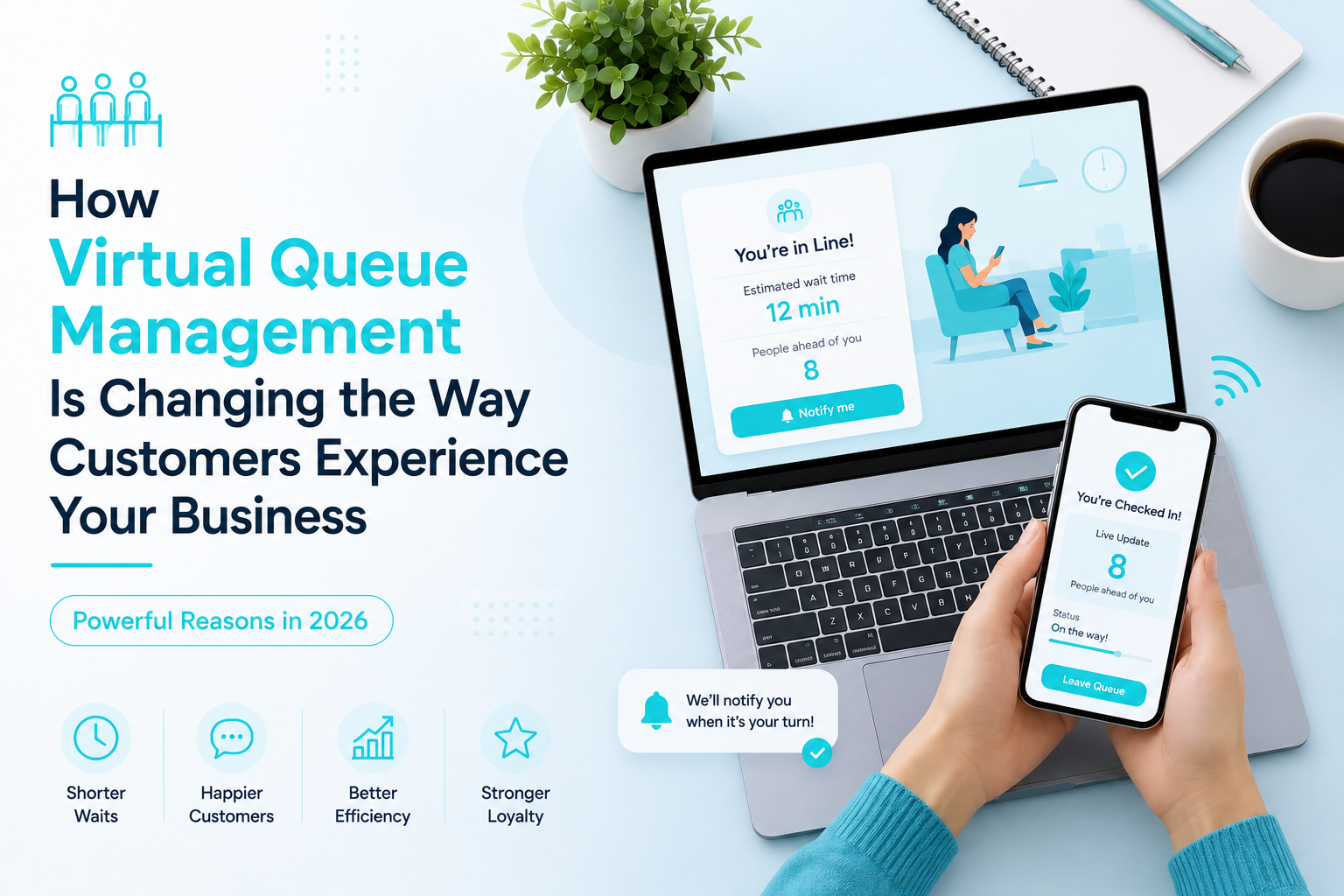
How Virtual Queue Management Is Changing the Way Customers Experience Your Business: Powerful Reasons in 2026
May 12, 2026
The moment a customers sees a crowd and walks out the door, you’ve lost not just a sale – you’ve lost their trust. Here’s the uncomfortable truth about physical queues, and the exact tool forward-thinking businesses are using to eliminate them completely.
It was a Tuesday morning. James had driven 20 minutes across town to renew a document at the city service office. He’d left early, skipped breakfast, found parking. He was ready.
He walked through the door at 9:14am and stopped.
Thirty-seven people. Three plastic chairs left along the wall. A hand-written sign on the desk that said “Take a number -wait time approximately 2 hours.” A small child was crying somewhere near the back. A man in a grey suit was pacing. An elderly woman had brought her own snacks.
James stood there for exactly eleven seconds. Then he turned around, walked back to his car, and drove home. He’d try again another day — or find another way entirely. The service lost a customer. The morning was wasted. And nobody inside that office even noticed he’d come and gone.
This happens thousands of times every day across clinics, salons, banks, service centers, and offices around the world. A customer arrives, sees the chaos, and makes a silent, invisible decision to leave. You never know their name. You never know they were there. And you never get the chance to serve them.
Table of Contents
The Hidden Cost of a Crowded Lobby
Most business owners think about their waiting room as a neutral space — an unavoidable part of operations. Customers wait. That’s just how it works. Right?
Wrong. Completely, expensively wrong.
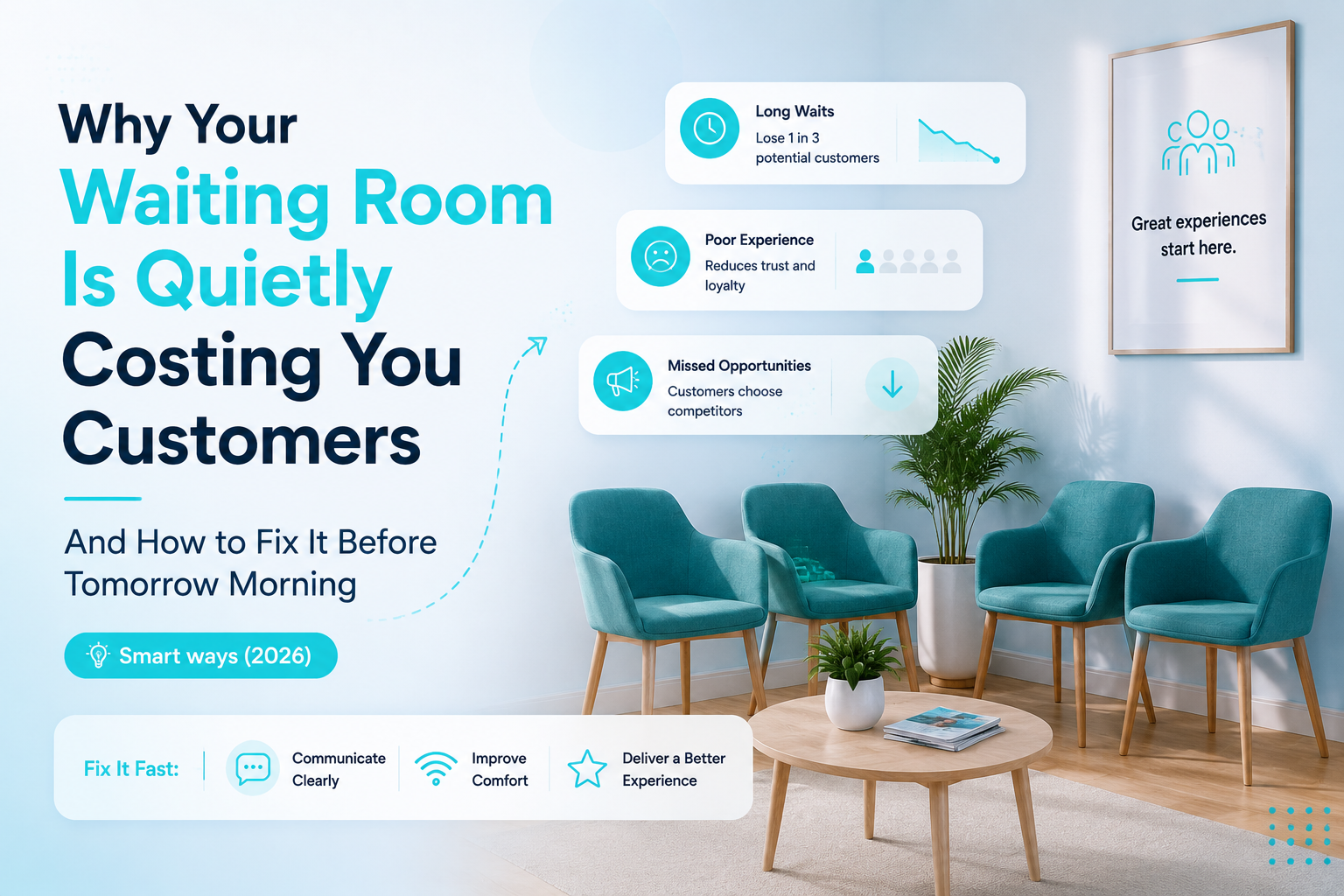
Research into customer behavi0r tells a story that should make every business owner sit up. When people are forced to wait in a physical queue without knowing how long it will take, two things happen in rapid succession: their anxiety rises, and their willingness to stay drops. The moment a customer can’t answer the question “How long will this actually take?” they start calculating whether their time is better spent elsewhere.
40%
of customers abandon a queue when they can’t see their wait time
68%
reduction in no-shows when customers get proximity alerts
5 min
is all it takes to get Web Check-In live on your business
And here’s what makes it worse: the customers who leave don’t complain to your face. They leave quietly. They might leave a review later or they might simply never come back, with no explanation and no warning. You’ll never know whether Tuesday’s slow afternoon was because business was naturally quiet, or because twelve potential customers looked through your window, saw the queue, and kept walking.
“The most dangerous customers isn’t the one who complains. It’s the one who leaves silently and never gives you the chance to make it right.”
The physical waiting room, in its traditional form, is not a neutral space. It is actively working against your business turning potential revenue into missed opportunities, and turning first-time visitors into people who chose your competitor instead.
What Customers Actually Want When They Wait

Here’s the thing that surprises most business owners when they first hear it: customers don’t actually mind waiting. What they mind , what drives them out the door and toward your nearest competitor is not knowing how long the wait will be.
This is one of the most well-documented findings in customers experience research. A 10-minute wait that feels transparent and managed is almost always preferable to a 5-minute wait that feels chaotic and undefined. Give someone a number. Give them visibility. Give them the ability to step outside, grab a coffee, sit in their car, and come back when it’s actually their turn and their experience of waiting transforms completely.
The difference between these two scenarios isn’t the length of the wait. It’s the visibility of it. And that’s precisely what Web Check-In was built to provide.
A clinical study shows that how people perceive their wait not just how long they actually wait strongly affects their satisfaction and overall experience.
Introducing Web Check-In: Your Lobby, Reinvented
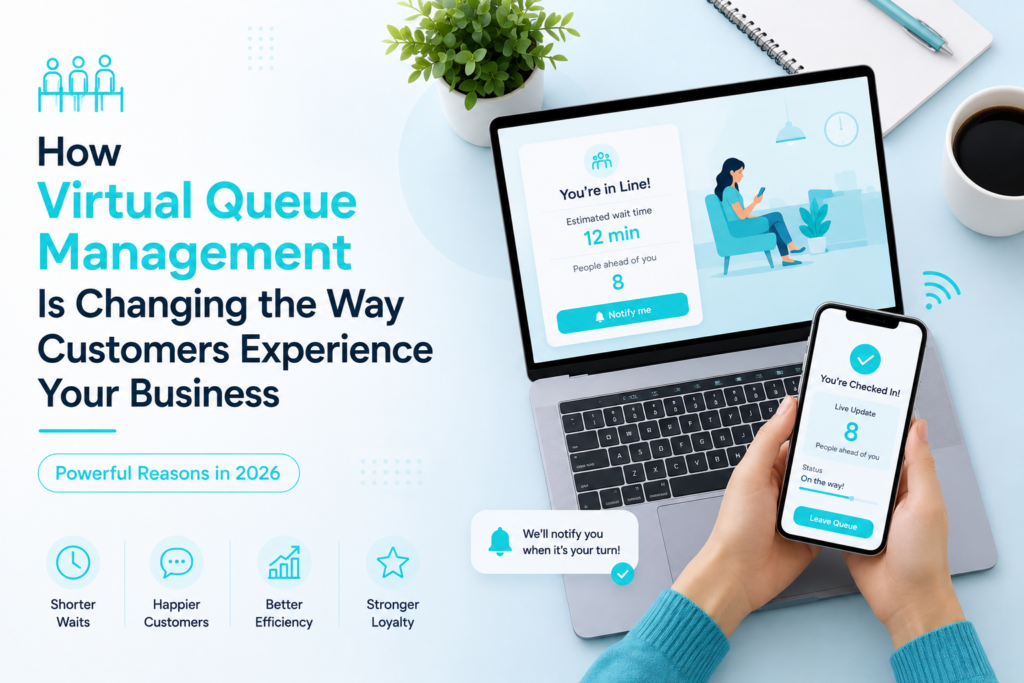
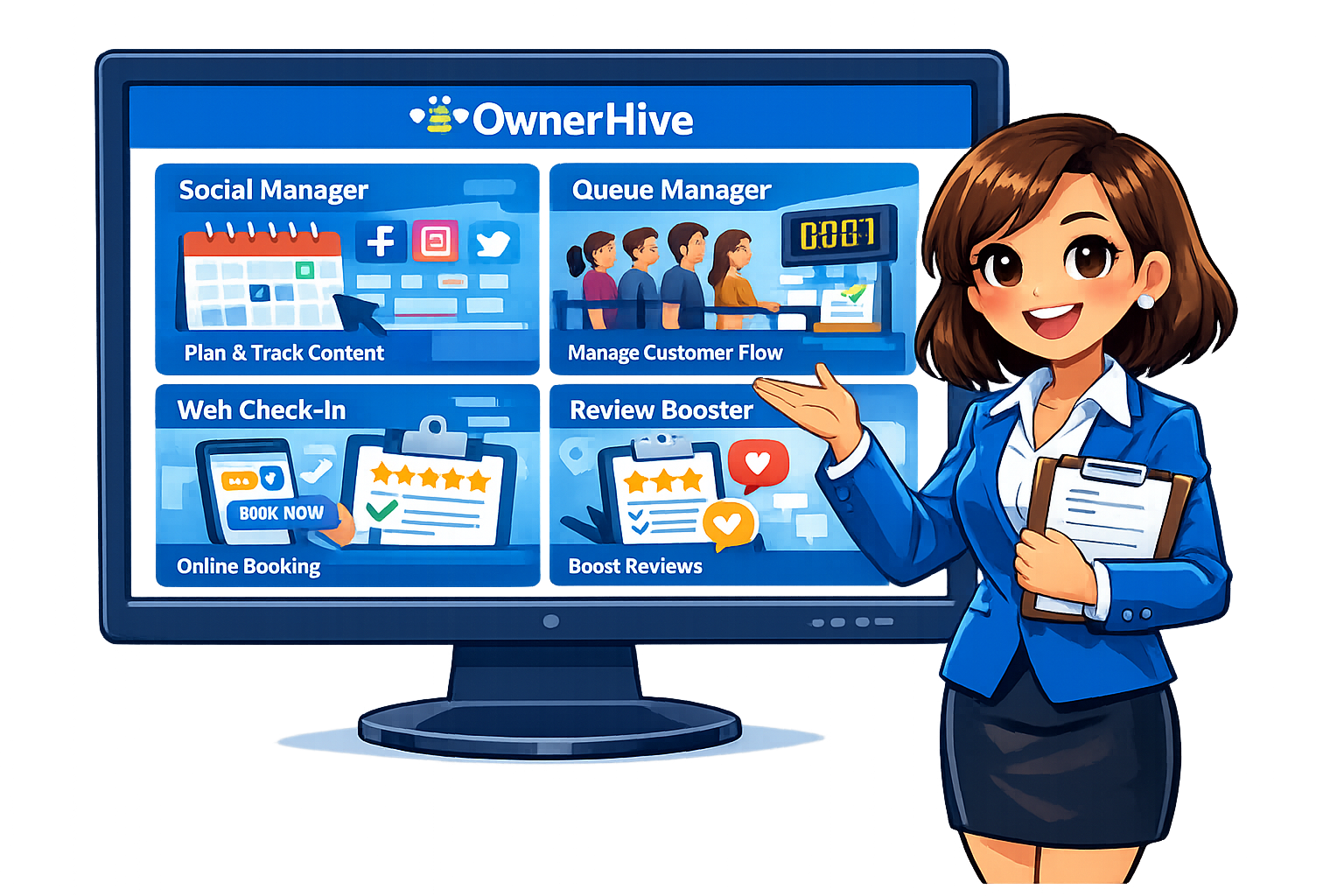
Web Check-In by OwnerHive is exactly what it sounds like and it’s simpler than almost anything you’ve implemented in your business before. It turns your website, your Google Maps listing, your Instagram bio, or a QR code on your front door into a live, fully functional digital queue. Customers check in from wherever they are. They see their position in real time. They get notified when it’s almost their turn. And they show up exactly when you need them refreshed, relaxed, and ready.
No app to download. No account to create. No passwords to forget. Just a name, a phone number, and a button that says “Check In Now.”
The Old Way:
The Physical Waiting Room
Customers arrive, see a crowd, and either wait in anxious silence or leave without a word. Staff spend their morning managing the lobby instead of doing their jobs. No-shows pile up. Revenue quietly bleeds out through the front door.
Web Check-In:
The Digital Lobby
Customers check in from home, their car, or the café across the street. They see their live position. They get a heads-up when they’re close. They arrive just in time calm, happy, and ready to be served.
How It Works in Plain English
You don’t need a developer. You don’t need to restructure your business. You don’t need to retrain your team. Here is the entire setup process, exactly as it happens:
Enable Web Check-In from your OwnerHive dashboard
One toggle. Takes about 30 seconds. Set your business name, your queue capacity, and how you want to estimate wait times. Done.
Copy your embed code or shareable check-in link
Your unique code is generated instantly. Paste it into your website WordPress, Wix, Squarespace, custom HTML, anything. Or skip the website entirely and share your direct check-in link on WhatsApp, Instagram, or Google Maps. Print it as a QR code and stick it to your front door.
Customers check in – from wherever they are
They tap the link, enter their name and number, and they’re in the queue. They see their position live. When they’re two spots away, an automatic notification brings them back. They arrive on time. Every time.
Your team manages everything from one dashboard
Every check-in shows up on your OwnerHive dashboard in real time. One click to mark someone as Serving, Completed, or No-Show. At the end of the day, you get a full report: peak hours, average wait times, no-show rates. Data you can actually use.
⏱️ Real Talk on Setup Time
We’ve had businesses go from “never heard of OwnerHive” to “first customers just checked in online” in under 8 minutes. The embed code is one line. The dashboard is self-explanatory. Your first customers can check in before you finish your next cup of coffee.
Who Is This Actually For?
If customers walk in and wait, Web Check-In was built for you. Here’s who’s already using it every day and what changed for them when they did:

A dental clinic in Accra told us their waiting room used to hold 15 people every morning before 9am. After enabling Web Check-In, it now holds zero. Patients check in from home, arrive when it’s their turn, and the whole atmosphere of the clinic the noise level, the staff stress, even the smell of anxiety changed overnight. “It feels like a completely different business,” their office manager said. “And we didn’t change anything except how people join the queue.”
A barbershop owner in Lagos added his check-in link to his Instagram bio on a Monday. By Wednesday, clients were checking in before they’d even left their house. His barbers stopped sitting idle between customers. His walk-ins stopped leaving when they saw a crowd. And his Google reviews which hadn’t moved in months —started climbing, because customers were now consistently writing about how smooth and professional the experience felt.
A government service desk that used to see citizens sitting on the floor during peak hours — literally on the floor, because the chairs ran out now has a calm, orderly operation. Visitors check in at home or from the parking lot. The room is clean. The staff are focused. And the complaint rate, which had been a constant headache for the department head, dropped by more than 80% in the first month.
The Real Benefit Nobody Talks About: Your Staff
Every conversation about queue management focuses on the customers and rightly so. But there’s a second group of people who suffer in a chaotic waiting room, and they’re the ones you rely on most: your team.
When your lobby is crowded and anxious, your frontline staff absorb that anxiety. They spend their mornings fielding the same question on a loop — “How much longer?” — while simultaneously trying to do their actual jobs. They manage irate customers, maintain paper lists, chase no-shows by phone, and try to keep a professional face while feeling genuinely overwhelmed.
Web Check-In gives your staff something remarkable: their focus back. When the queue manages itself when customers check in online, see their own status, and arrive on time — your team can stop managing people and start serving them. That shift, from lobby management to actual work, changes the energy of your entire operation. Staff are calmer. Customers are treated better. The whole experience goes up a level.
“My front desk used to dread busy mornings. Now the queue runs itself. My team just serves. That’s all they have to do.”
What Happens to James?
Remember James , the man who drove 20 minutes, walked through the door, saw 37 people waiting, and drove home?
Here’s what his Tuesday morning looks like now, for the businesses that have set up Web Check-In.
He checks the service office’s website the night before. There’s a widget right on the homepage: “Join tomorrow’s queue online skip the wait.” He enters his name and number, and he’s #4 in line for the next morning’s first slot. He gets a confirmation on his phone. He sleeps well.
At 8:47am, he gets a notification: “You’re 2 spots away head over now.” He arrives at 8:52am. He walks in, gives his name, and is called within four minutes. The whole thing takes less than fifteen minutes from arrival to done. He drives home before 9:30am, stops for breakfast, and leaves a five-star review that evening.
Same office. Same staff. Same service. Completely different story.
Your Waiting Room Is a First Impression. Make It Count.

The waiting room is often the first physical experience a customer has with your business. Before they’ve spoken to your team, before they’ve experienced your service, before they’ve made any judgement about your quality , they’ve stood in your lobby and formed an opinion.
A crowded, noisy, poorly managed wait tells a customer something about how you operate. It signals: we didn’t think about your time. We didn’t think about your comfort. We didn’t think about you at all, actually you’re just a number in a crowd.
A smooth, transparent, digital check-in experience tells a very different story. It says: we thought about this. We respect your time. We know you have better things to do than sit in a plastic chair. So we built something that works for you.
That first impression sets the tone for everything that follows. And right now, for less than the cost of a coffee a day, you can change it completely.